
Sustainability is Only for the Rich
 I’ve never been able to grock how the well-known triple bottom line phrase ‘people planet profit’ has anything to do with sustainability. Please tell me how ‘profit’eering has anything to do with creating healthier societies and a balanced earth ecology?
My interpretation of people, planet, profit goes like this: Elitist PEOPLE who PROFIT from others get to use the PLANET however they want, and make the laws that allow them to do so.
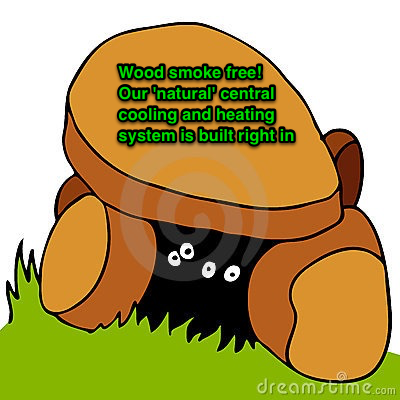
Below is a great example of this, and how ‘doing good’ in order to ‘save the planet’ has nothing to do with human well being. Unless of course you are one of the monetary elites. And so what about the rest of us??
Look. If an organization like EPA is going to create over-arching rules that ban things, they have to also create solutions to replace what will be taken away by the ban. In this case, it means giving every poor person, whose wood stove is no longer usable by law, a stove that is useable. This has to be added to the policy or guess what? It’s not “sustainable”. … Duh.
Well, it’s time for me to go find a cold rock to sleep under, because my wood stove has just now been banned. Sleep tight all you environmental extremists who have a pay check that allows you to buy your warmth, and ignore what is really happening here.
Read this article and you tell me what’s right about non-democratic organizations like the EPA proclaiming new laws in this way? http://www.forbes.com/sites/larrybell/2014/01/29/epas-wood-burning-stove-ban-has-chilling-consequences-for-many-rural-people
God I’m pissed.
Similar Posts:
- Put in Values and an Organizational Structure That Will Stimulate Innovation
- World War 3 – In the Name of Social Good – For Who?
- Triple Bottom Line Investing: A New Framework for Innovation
- Is Sustainable Commerce an Oxymoron?
- Policy Innovations: When Principles Pay


 Inquiry: Starting everyone of my questions with ‘open ended’ question words including the 6 ‘W’s: WHY is it this way, WHAT is it exactly, (w)HOW does it work, WHO is involved, WHEN is it enacted, WHERE does it reside or show up. In this way, your research will expand from isolated assumptions into broader understandings and improve data outcomes.
 A more challenging but (in my view) more fun part of development, is enabling your research into a ‘social performance’ process for creating social capital and social innovation. This is done through 3 phases as follows (note ‘phases’ are different than ‘stages’):