
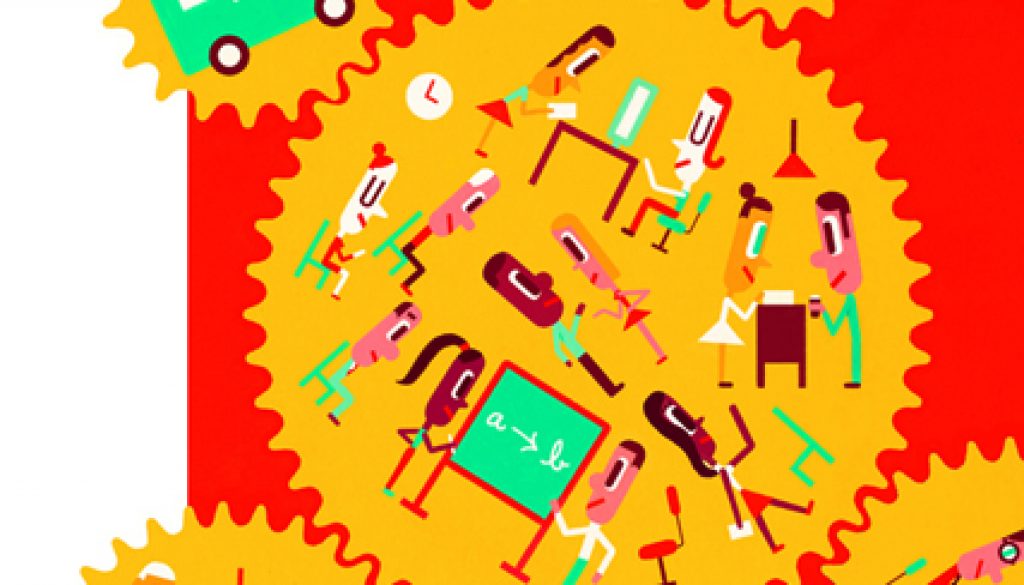
Social Innovation … What is it really?
Social Innovation is the next wave that pushes whole system design to new heights. It goes beyond sustainability by allowing technology, humanity, and environment to synchronously converge within an ecological world society that is more conscious, and more aware of our creative collective impact. It defines how our creations can better fit into a greater whole, thereby sustaining and evolving planetary systems (including ourselves), rather than unraveling and destroying it.
Social Innovation Review out of Stanford is writing some interesting perspectives on this critical subject. This article, called “Social Innovation From the Inside Out” holds some keys to understanding its potential, which is far beyond how it used today.
- “… When it comes to innovation, social-purpose organizations face particularly daunting challenges. Social innovation isn’t just about providing new products and new services; it’s about changing the underlying beliefs and relationships that structure the world.”
More on the Role of Social Innovation and it’s Collective Impact from Vic’s blog:
Collaborative Design: Methods for Developing Social Innovation and Social Capital
Similar Posts:
- Vic on Sustainable Innovation
- Collaborative Design: Methods for Developing Social Innovation and Social Capital
- Reconsidering the Meaning of "New" Technology
- Defining a Regenerative Commerce System
- A Six-Point Architecture For Mapping Next-Generation Innovation


 Inquiry: Starting everyone of my questions with ‘open ended’ question words including the 6 ‘W’s: WHY is it this way, WHAT is it exactly, (w)HOW does it work, WHO is involved, WHEN is it enacted, WHERE does it reside or show up. In this way, your research will expand from isolated assumptions into broader understandings and improve data outcomes.
 A more challenging but (in my view) more fun part of development, is enabling your research into a ‘social performance’ process for creating social capital and social innovation. This is done through 3 phases as follows (note ‘phases’ are different than ‘stages’):